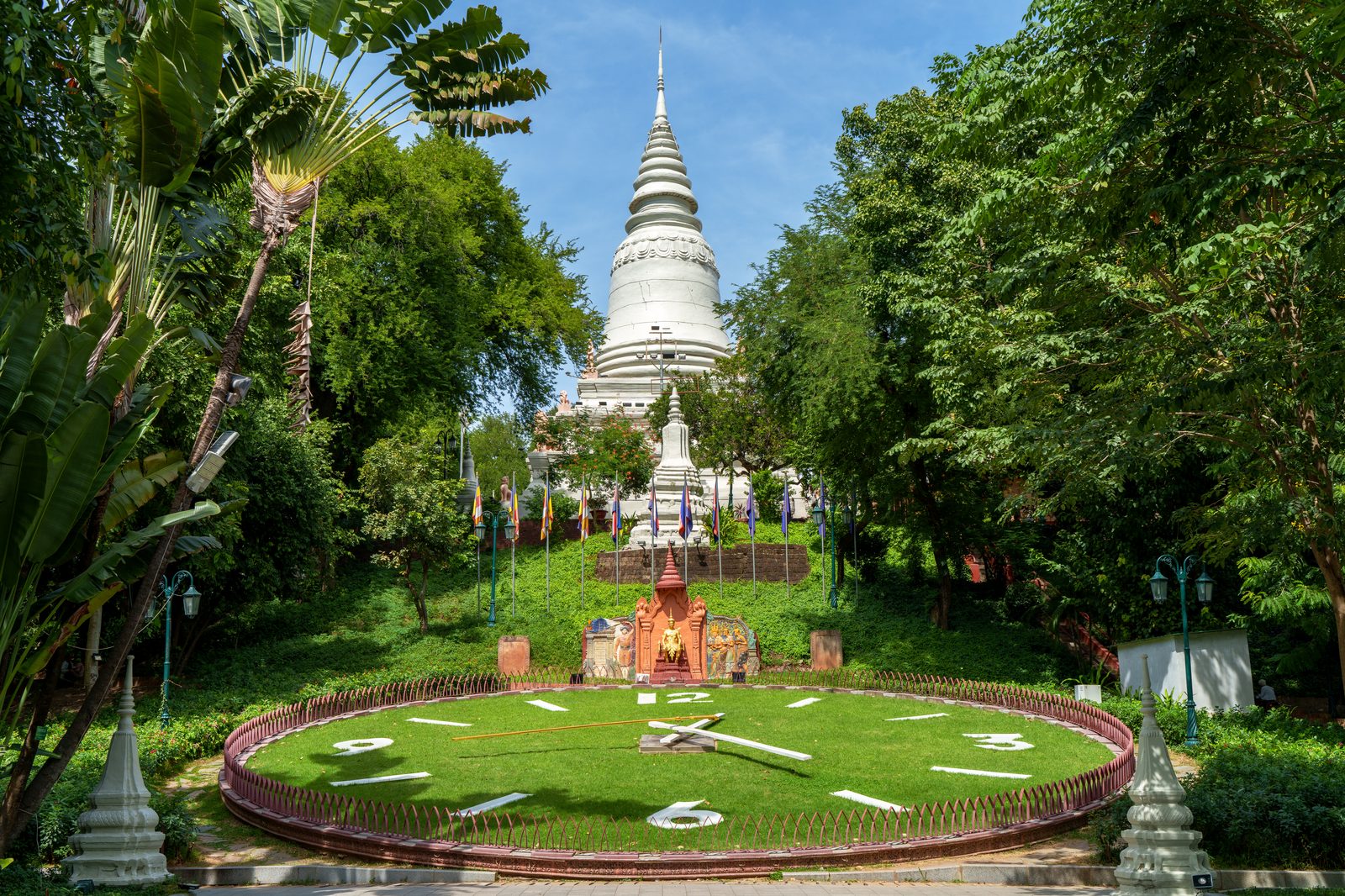
វត្តភ្នំដូនពេញ
Wat Phnom Daun Penh
One of Phnom Penh's most iconic historic Buddhist landmarks, perched on a hill above the city center.
វត្តភ្នំដូនពេញ · /vɔət pɲom/
A sacred tree, five statues, the birth of a city. In 1372 the wealthy widow Lady Penh (Daun Penh) found a drifting Koki tree on the Tonlé Sap riverbank; within it lay four bronze Buddhas and one stone Vishnu. She led her neighbors to mound the earth into a hill and enshrine the relics — and Phnom Penh ('the hill of Penh') was founded, with Wat Phnom as the spiritual heart of the millennium-old capital.— The legend of Lady Penh
About
About Wat Phnom
Wat Phnom Daun Penh is one of Phnom Penh's most famous historic temples, sitting atop a small hill in the city center. It is both an active Buddhist site and a cultural landmark tied to the very origin of the city's name.
Type
Buddhist temple
Location
Phnom Penh, Cambodia
Rating
4.4 (9,467)
Hours
07:00 – 19:00
Why it's worth a visit
- The birthplace of the legend behind Phnom Penh's name
- A living Buddhist temple still busy with devotees
- City views from the hilltop
- Khmer art, murals and sacred relics
Visitor tip
Plan your visit
The hilltop is compact and easy to combine with other central Phnom Penh sights.
- Allow 30–60 minutes for a relaxed visit
- Dress modestly when entering the temple
- Pair it with the riverfront and Royal Palace area
- Go early for cooler weather and fewer crowds
History & Culture
The history of Wat Phnom
From a 14th-century legend to the spiritual heart of Phnom Penh.
The legend of Lady Penh
A wealthy widow, Lady Penh (Daun Penh, 'Grandmother Penh'), found four bronze Buddha statues — and one stone Vishnu — hidden inside a drifting Koki tree on the riverbank. She summoned her neighbors to mound earth into a hill (phnom) and enshrine the relics in a wooden shrine. The act gave the city its name: Phnom Penh, 'the hill of Penh'.
Capital moves to Phnom Penh
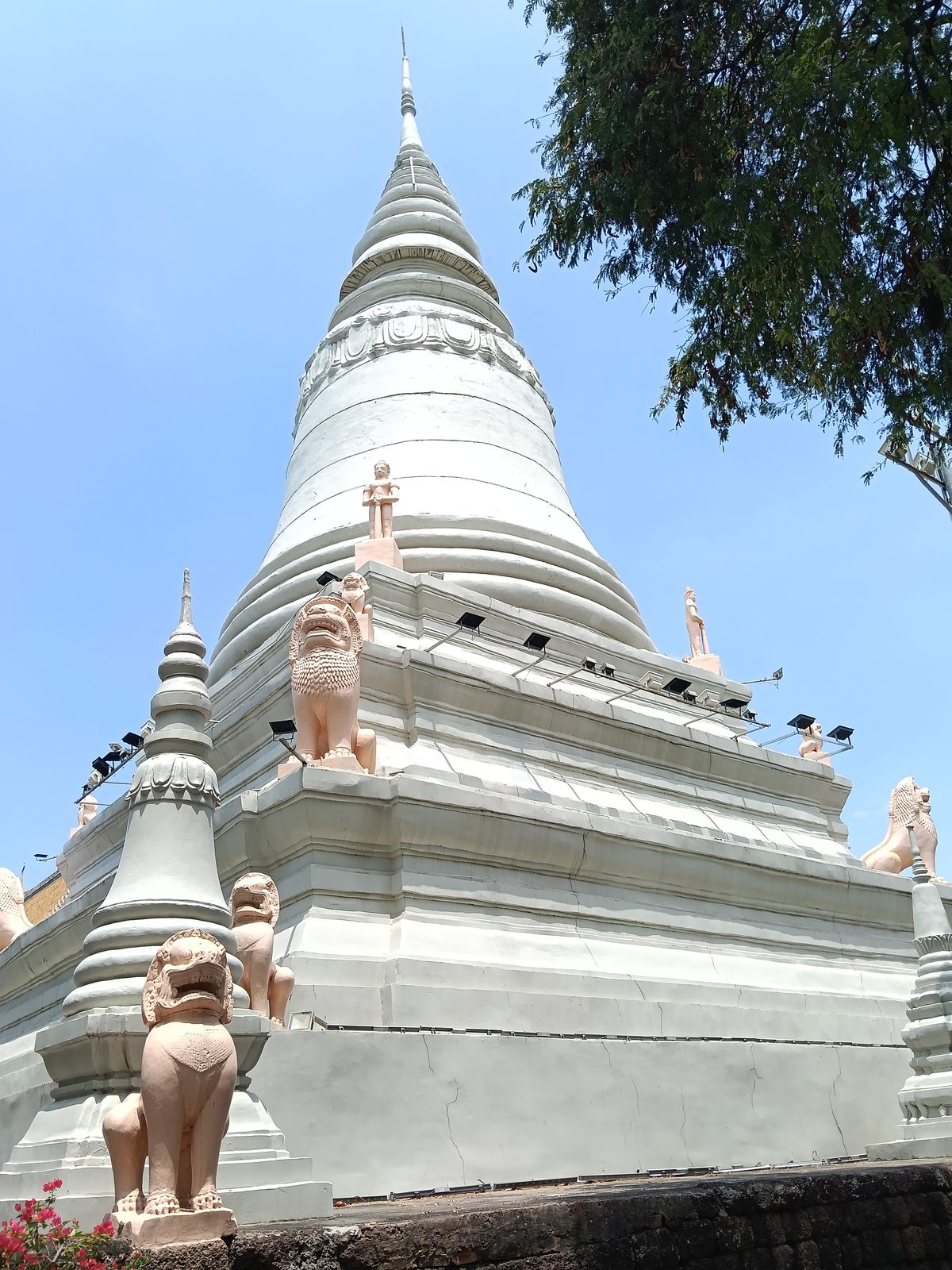
King Ponhea Yat relocated the Khmer capital from Angkor to Phnom Penh. He rebuilt Wat Phnom and raised a great white stupa (chedi) on the summit to house his ashes. The humble hill shrine was elevated into a royal spiritual center.
A growing sacred hill
Across centuries the shrine was repeatedly rebuilt and enlarged. The artificial hill became the focus of local faith, and the surrounding settlement gradually grew into today's capital.
French Protectorate care
Under the French Protectorate, successive kings restored and expanded the temple. The stupa and vihear (prayer hall) took on the later Khmer restoration style still seen today.
Hébrard's restoration
The renowned architect Ernest Hébrard led a major restoration during the colonial period, shaping the classic silhouette of Wat Phnom that visitors recognize today.
Symbol of the capital
Today Wat Phnom stands as a national cultural emblem and the namesake hill of Phnom Penh, welcoming devotees and travelers from around the world.
The founding legend of Lady Penh
The tale of Lady Penh and the drifting Koki tree is Phnom Penh's best-loved origin story. Inside the tree she found four bronze Buddhas and a stone Vishnu — a quiet sign of how Cambodian Buddhism blended with earlier Hindu devotion. The mound she raised became the hill, and her shrine became the temple that still gives the capital its name.
The legend of Lady Penh
Hear the 14th-century story of how a drifting Koki tree gave the city its name.
Architecture
Khmer Buddhist architecture
A layered hilltop sanctuary: stupa, shrines, murals and sacred trees.
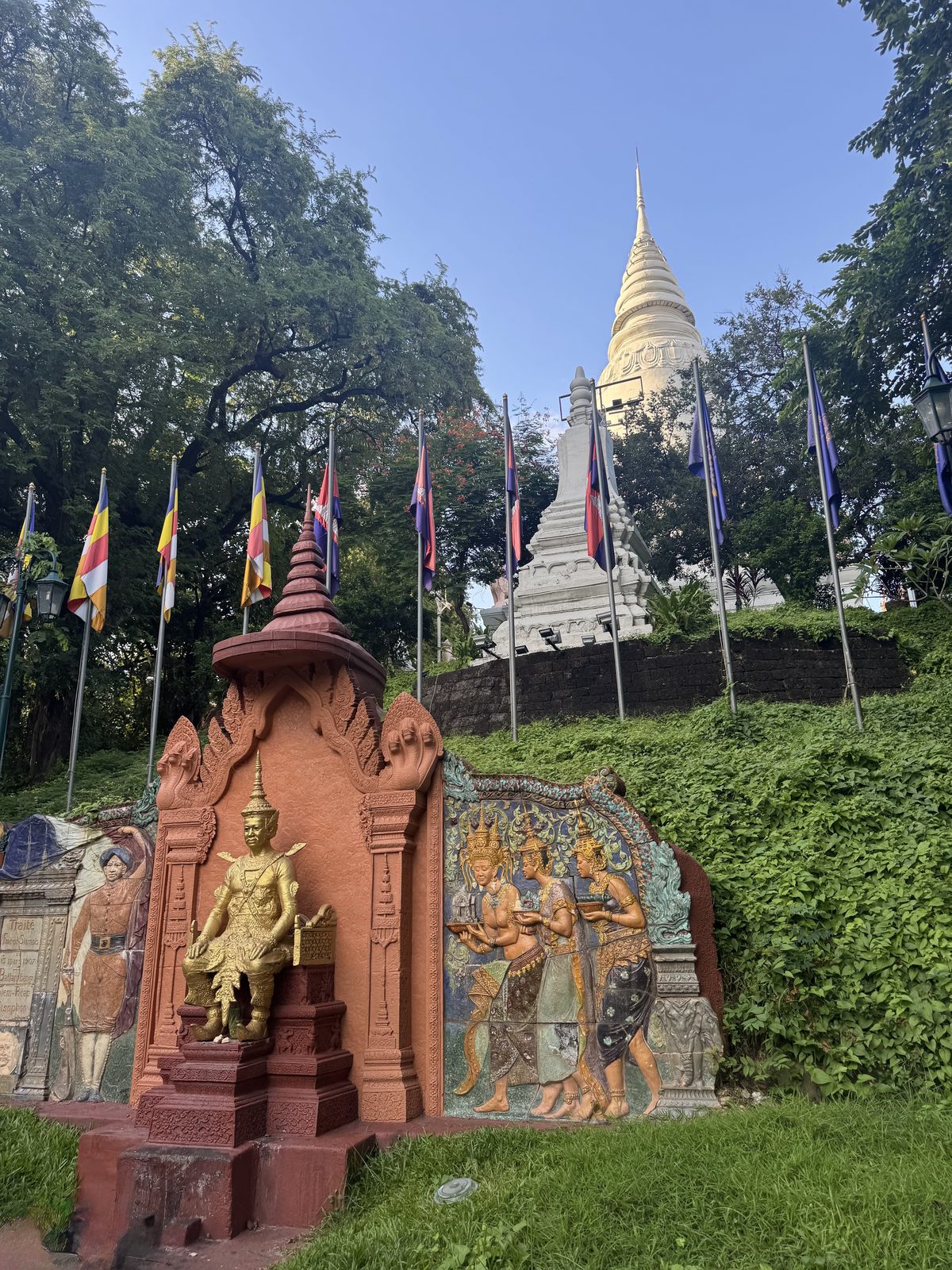
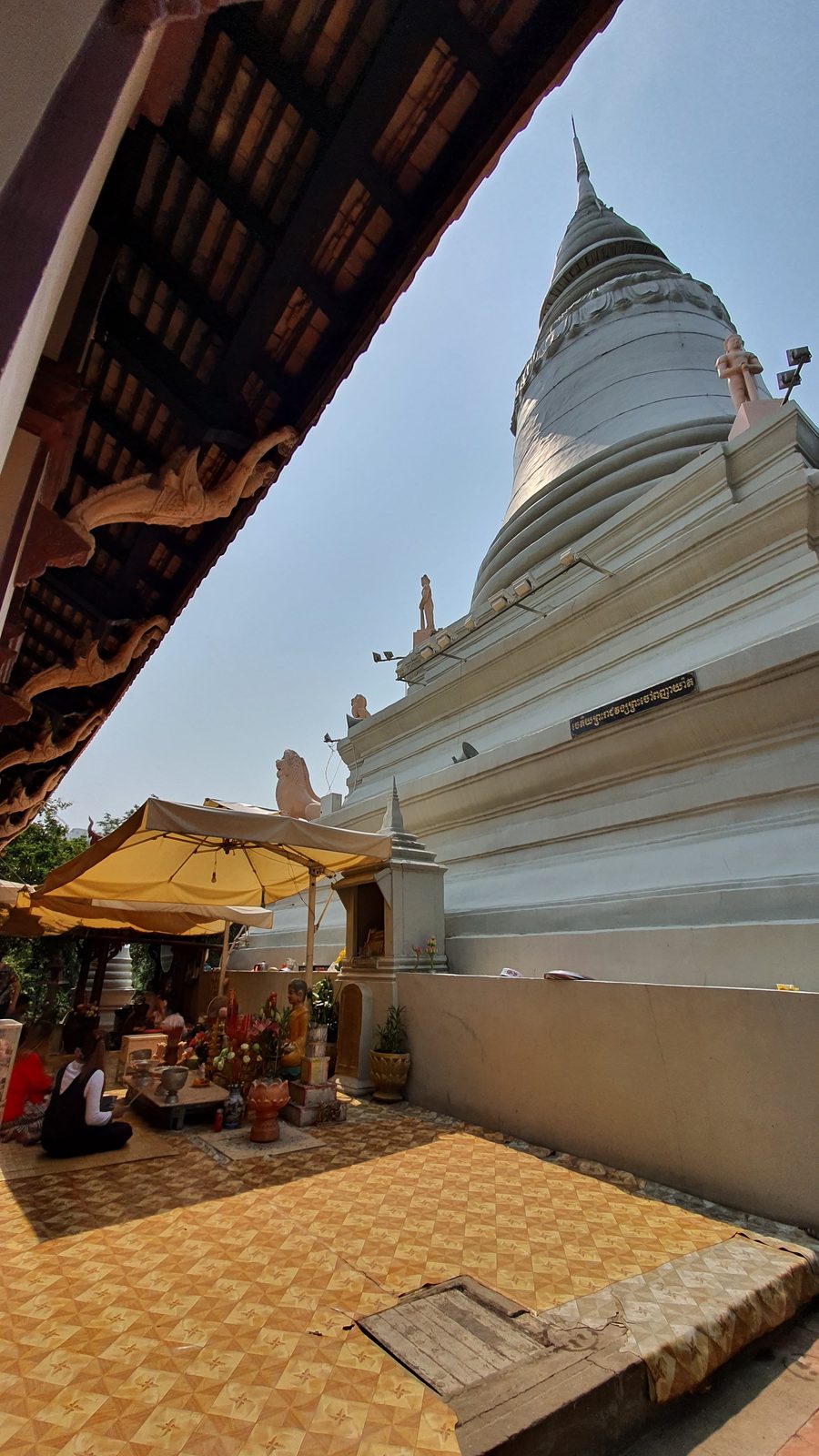
Central stupa
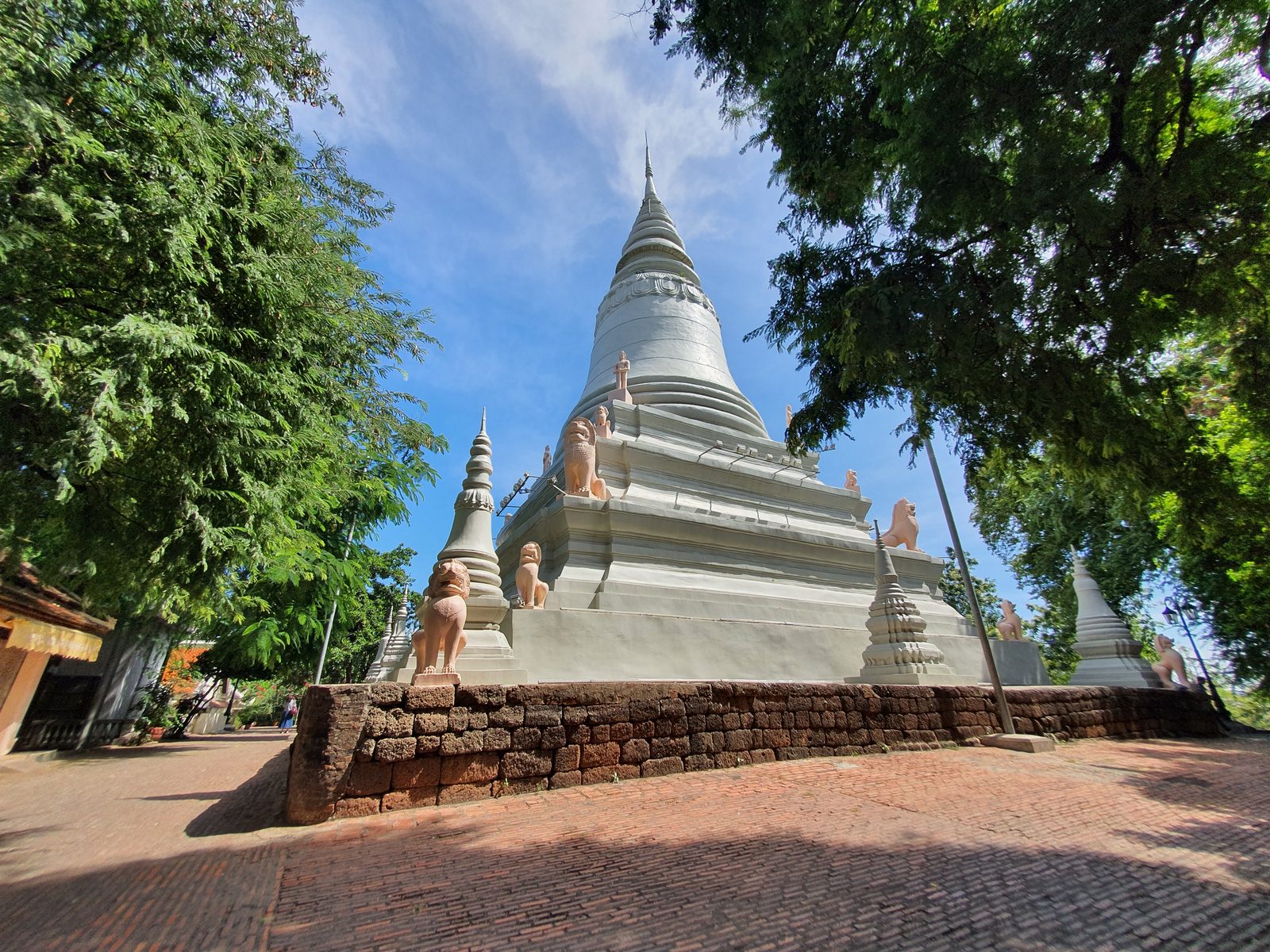
The tall white stupa enshrines sacred relics and marks the spiritual center of the hill.
Buddha images
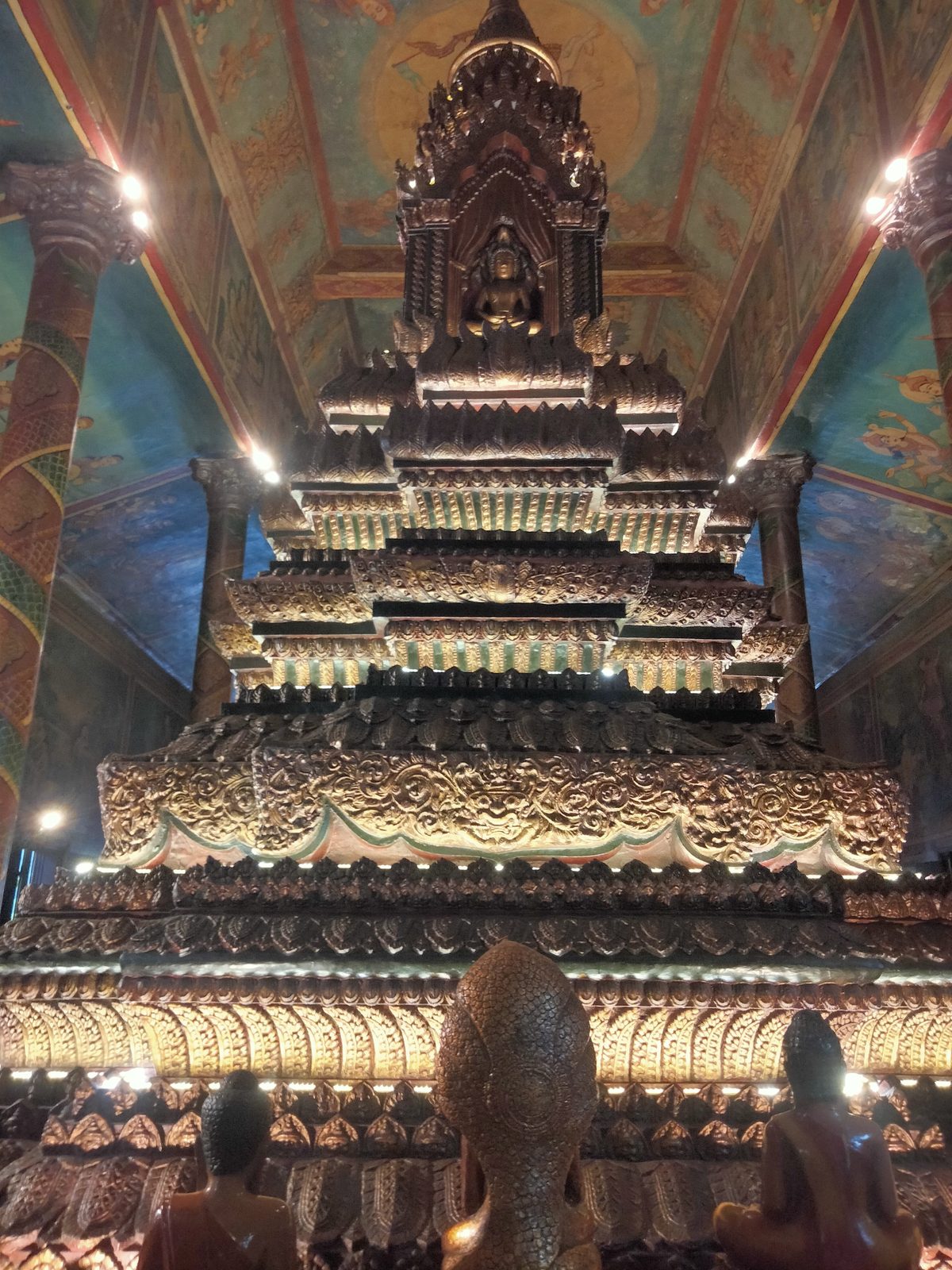
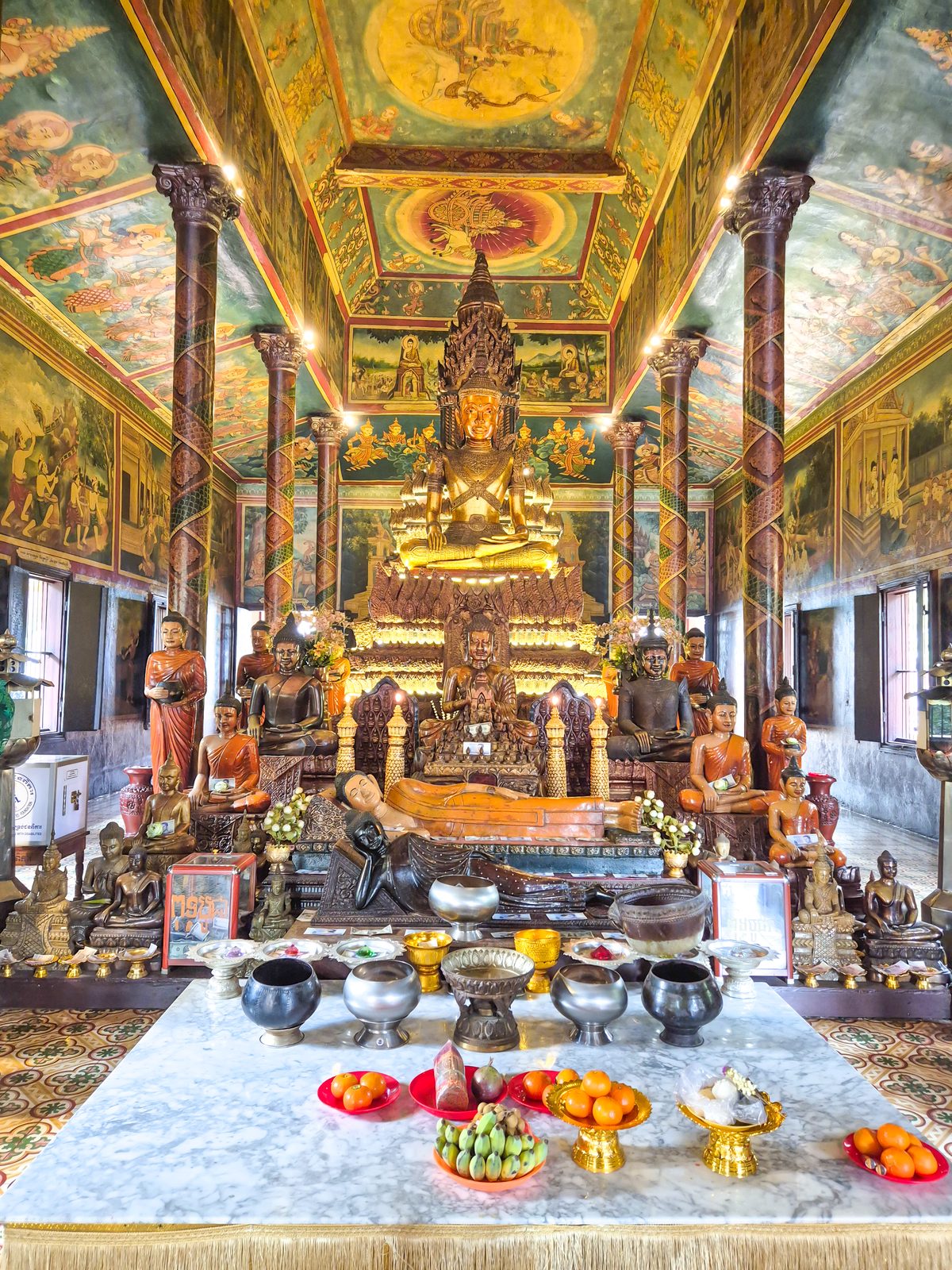
Revered Buddha statues — including those tied to the founding legend — are enshrined within the vihear.
Vihear murals
Painted in the early 20th century, the hall murals depict the Buddha's Jataka tales woven with scenes from the Khmer epic Reamker (Ramayana). Look up: the ceiling shows a cosmic mandala and the pillars are sheathed in gold.
Khmer ornament
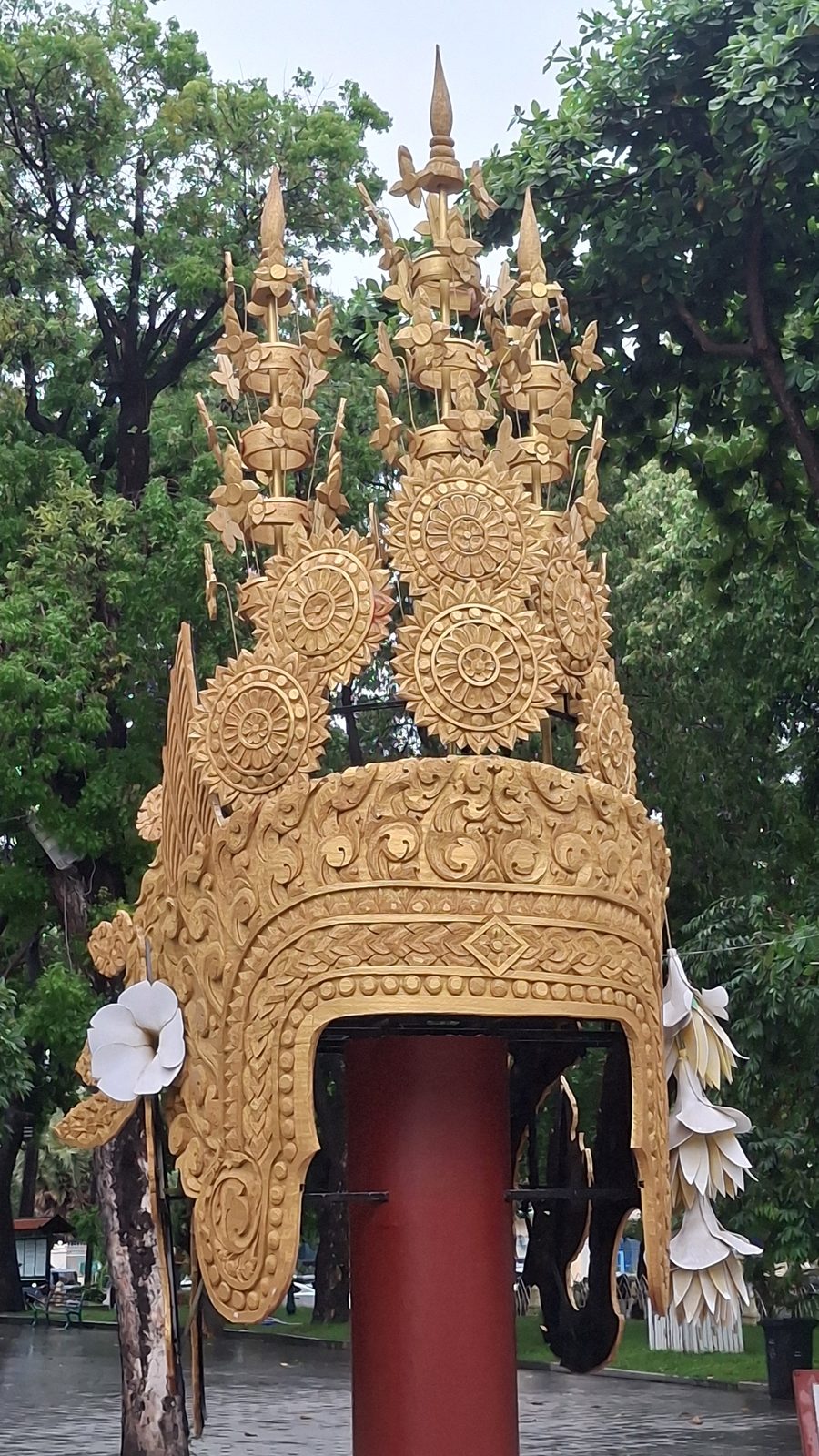
Naga balustrades, lotus motifs and carved lintels showcase classic Khmer craftsmanship.
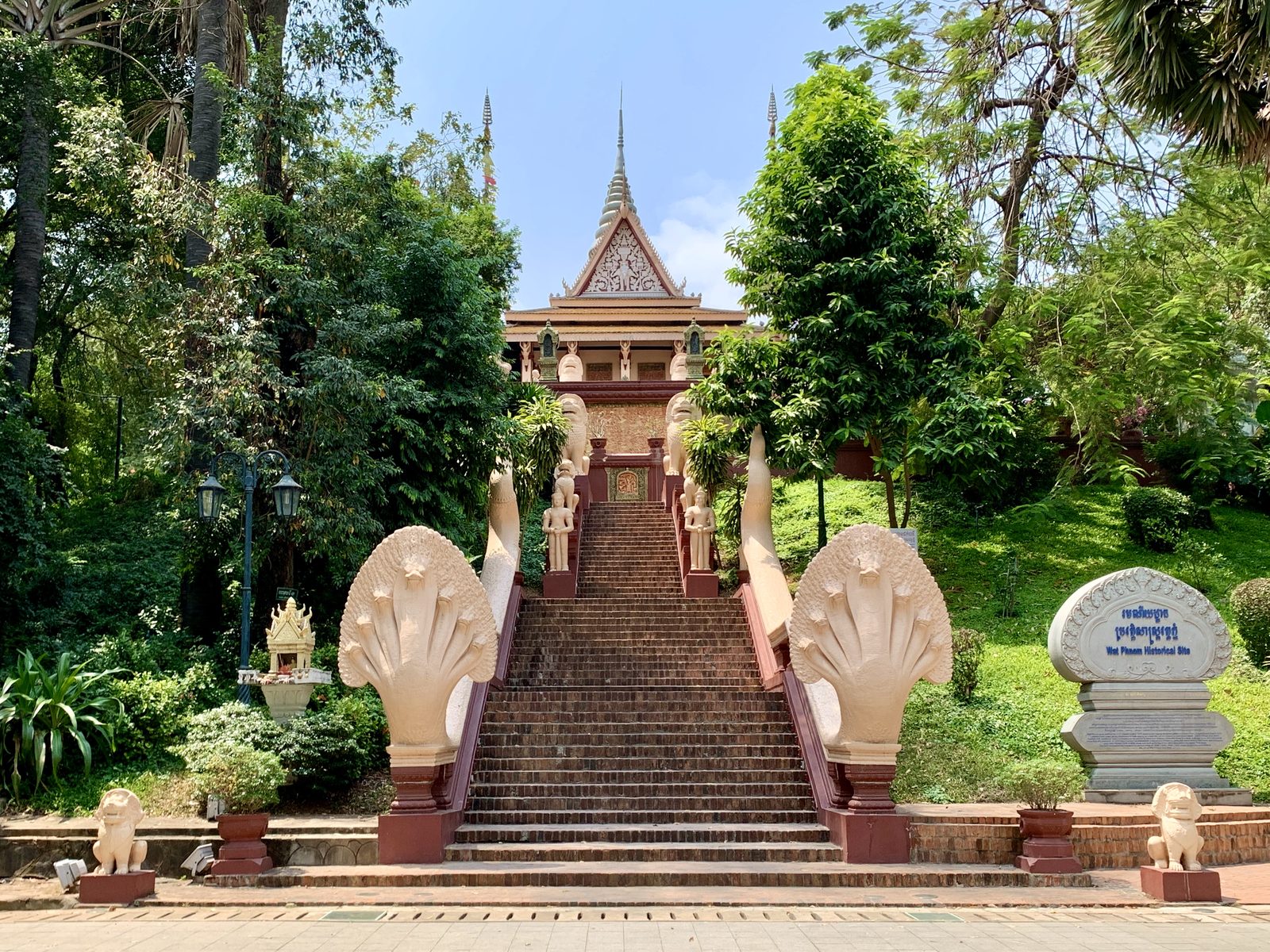
Seven-headed Naga stair
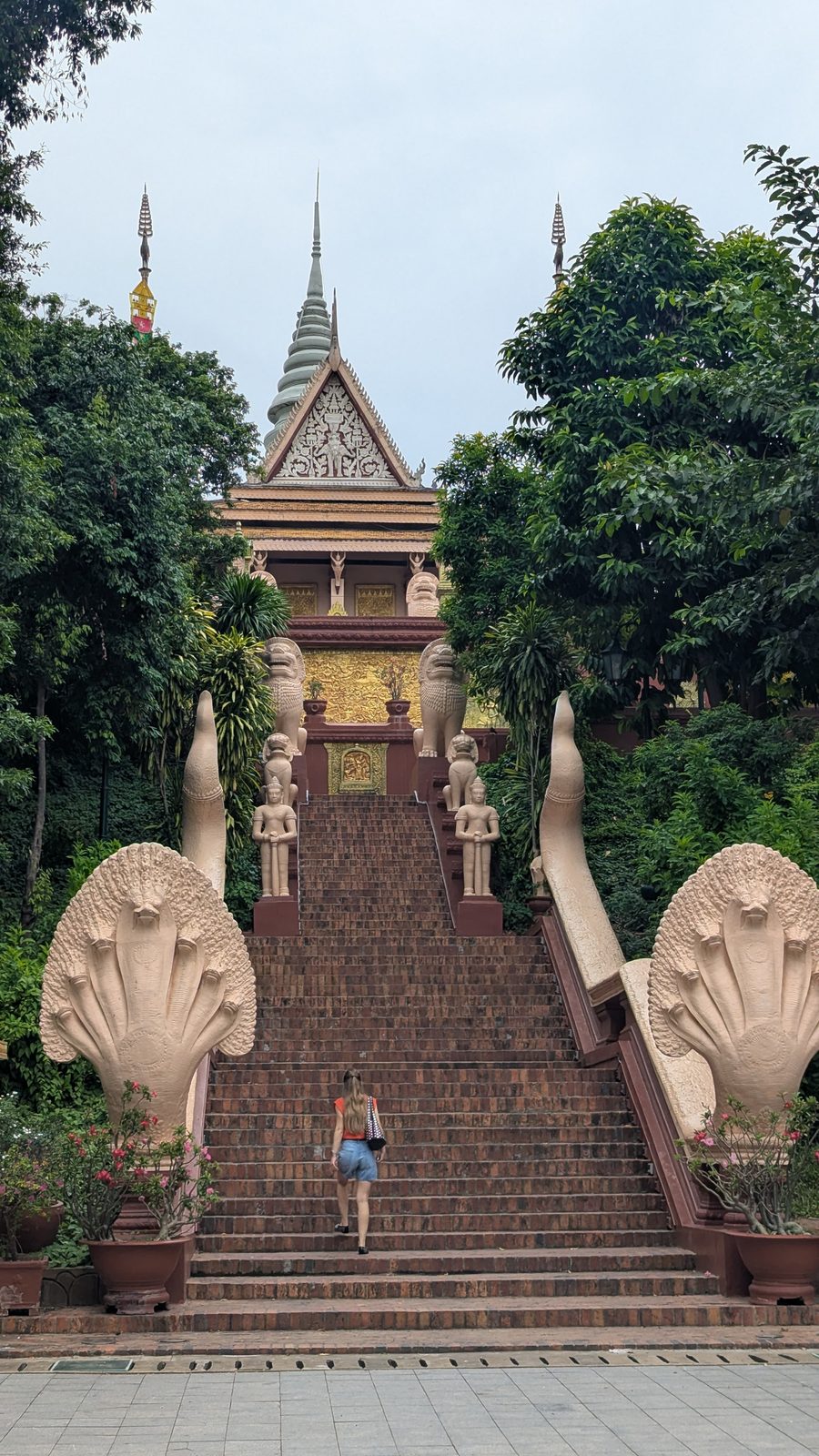
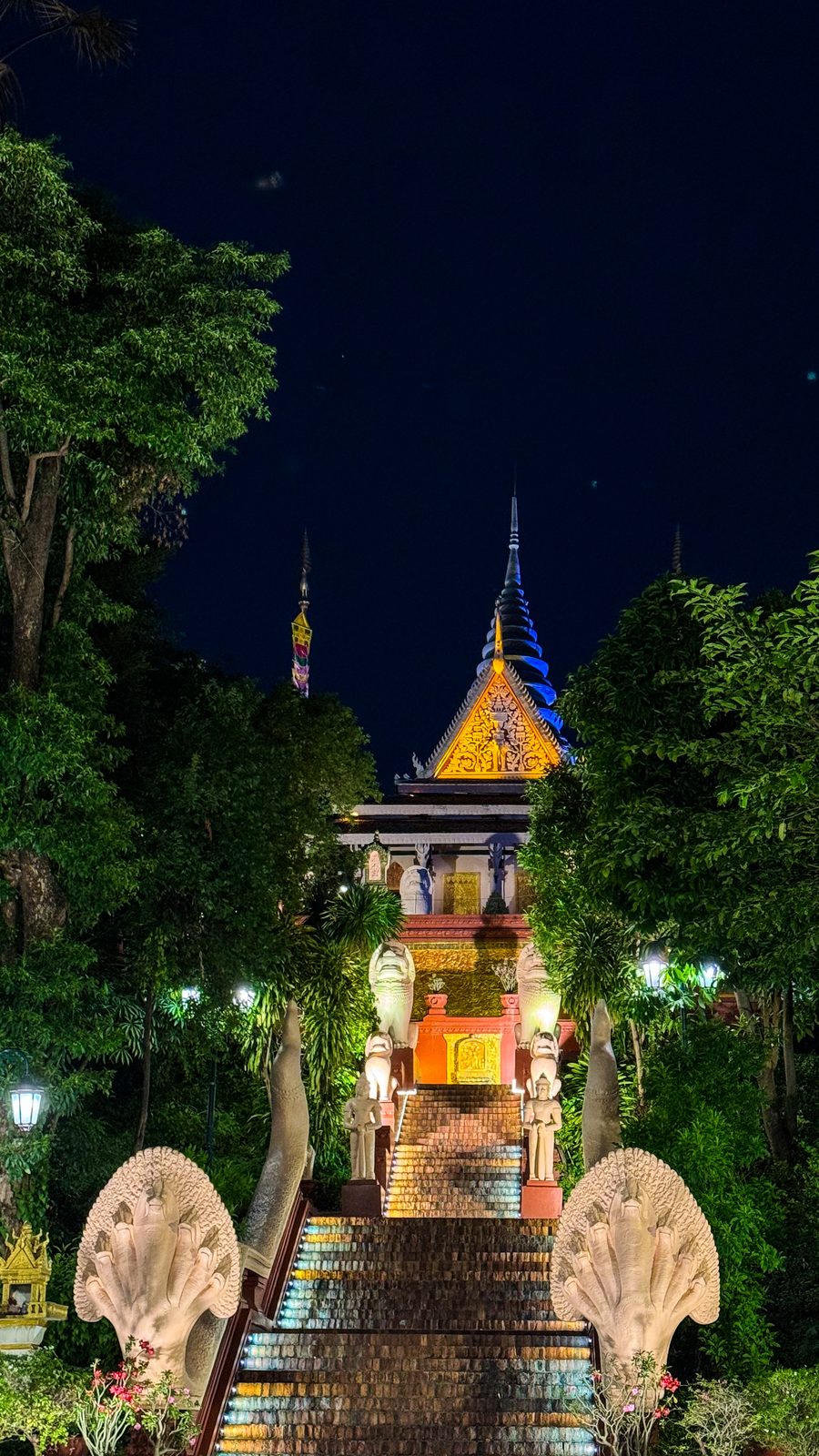
The dramatic stairway guarded by a seven-headed naga (serpent) symbolises the rainbow bridge linking the human world to the cosmos (Mount Meru) — a stairway to the heavens.
Sacred tree & shrines
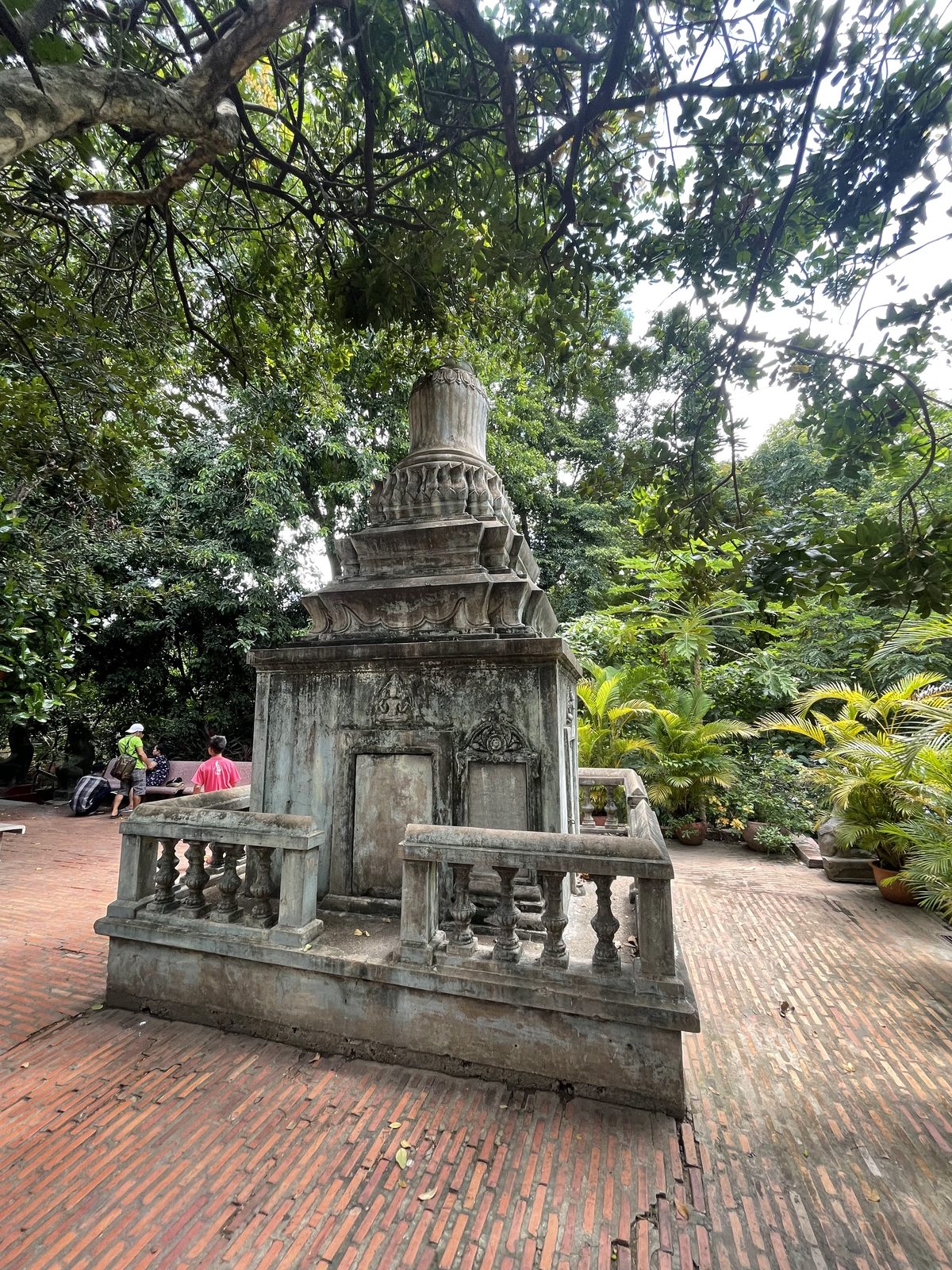
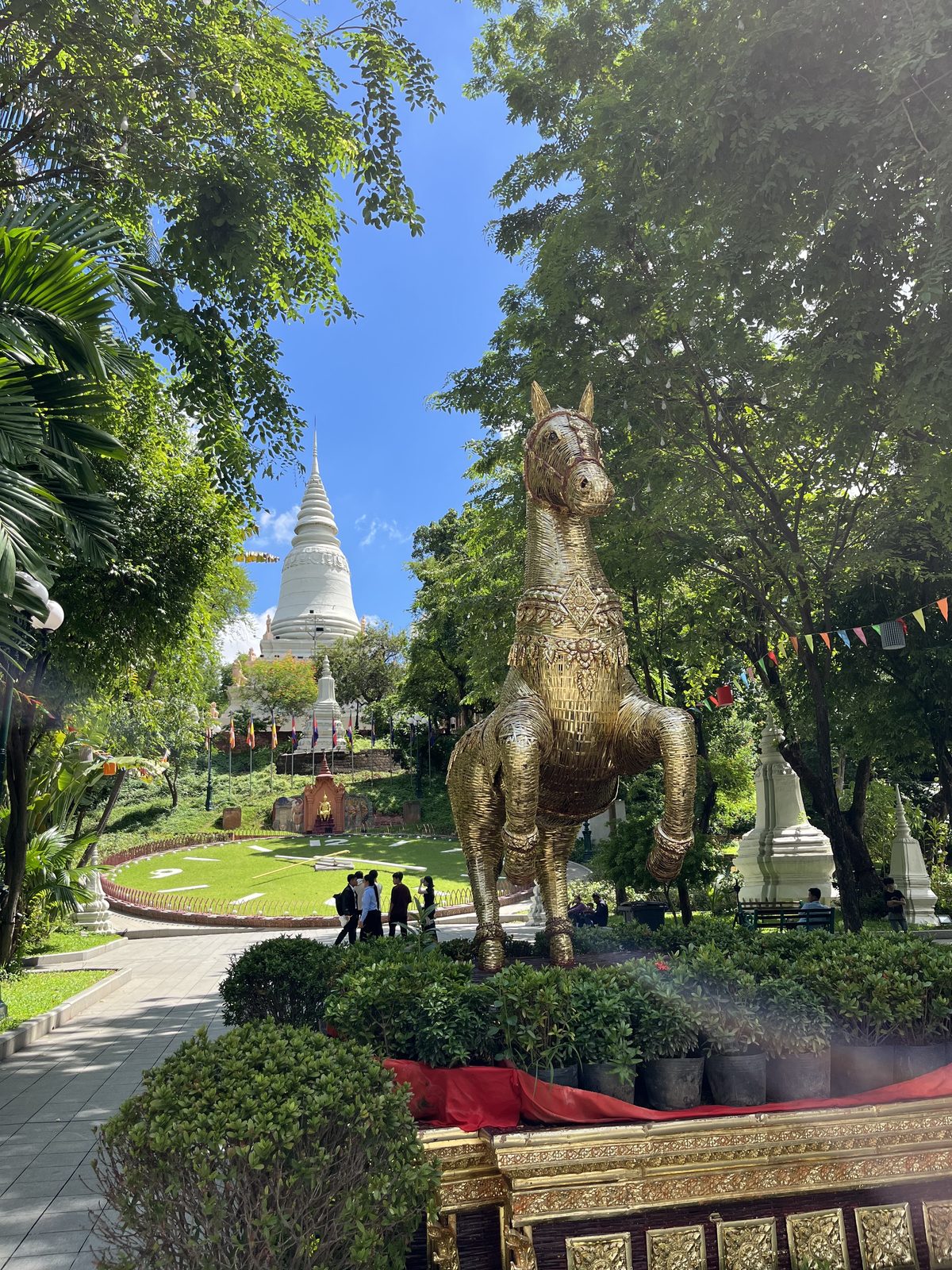
Shaded trees and Lady Penh's small votive shrine dot the hilltop, lending a calm, contemplative atmosphere.
Hilltop layout
The man-made hill lifts the temple above the streets, offering a quiet overlook of the city.
Preah Chau Shrine
On the hill's north side stands the Chinese sanctuary (Preah Chau), where Khmer, Chinese and Vietnamese folk faiths meet. Merchants and students come to pray for wealth, success in studies, or draw a fortune stick (kien).
Gallery
Moments at Wat Phnom
A visual walk through the temple, its art and the surrounding city.
Experience
What visitors can do
A short but fulfilling stop for culture, calm and city views.
Visit the temple
Observe local devotion in the vihear and learn about daily Buddhist practice.
Enjoy the city view
Overlook central Phnom Penh from the hilltop.
Photograph the details
Great for architectural and cultural photography — stupa, murals and ornament.
Feel local life
Watch residents come to pray, make offerings and seek blessings.
Best time to visit
When to visit Wat Phnom
The hilltop is open daily; each part of the day has its own mood.
Time of day
Cooler and quieter — a peaceful time for photography and prayer.
Warm, directional light — good for capturing architecture and murals.
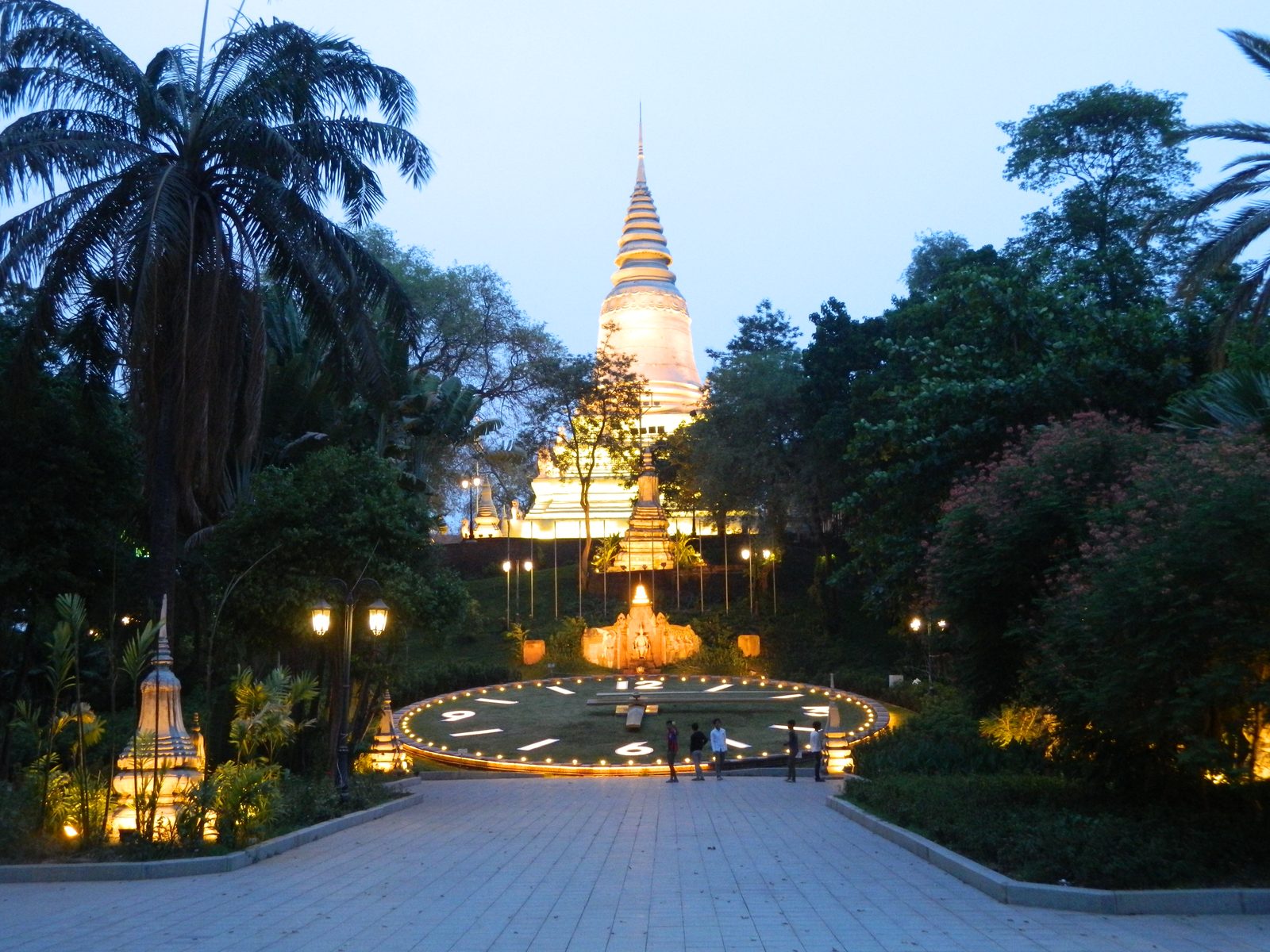
As the lights come on, the hilltop feels especially atmospheric at day's end.
ⓘ Busiest mid-morning and on weekends; go early for a quieter experience.
Getting there
How to reach Wat Phnom
Wat Phnom sits in central Phnom Penh, easy to reach from most parts of the city.
The hill is near the junction of Norodom Boulevard and Street 96, a short ride from the riverfront and the Royal Palace.
Tuk Tuk
The most common way to get around Phnom Penh.
- Flexible for short trips
- Fares vary by distance and time
- Agree on the price first
Taxi / Ride app
Good for families and hot weather.
- Metered taxis and ride apps available
- Good for groups with luggage
- Drop-off near the hill entrance
On foot
Walkable from the central riverfront area.
- About 15–20 min from the riverfront
- Flat, mostly shaded streets
- Combine with a riverside stroll
From the airport
Phnom Penh International Airport (PNH) to Wat Phnom.
- About 10 km / 25–40 min by taxi or ride app
- Fixed-price airport taxi at the rank
- Tuk tuk also possible in good weather
Practical info
Facilities & Nearby Services
Neutral, non-commercial reference for planning your visit — no specific businesses recommended.
- Restrooms Southeast base of the hill
- Parking Marked bays by the roundabout
- Supplies Convenience store within 300m
Restrooms
Public toilets at the southeast base of the hill and near the main stairway entrance. A small upkeep fee (≈500–1,000 riel) may apply — bring small change and tissues.
Parking & Drop-off
Tuk-tuk / ride-hail drop-off around the roundabout (Norodom Blvd × St 96). Motorbikes park in marked bays with an attendant; cars/buses use nearby commercial or underground parking, then walk 3–5 min.
Dining & Refreshments
Street vendors by the park path sell fresh coconut water, chilled bottled water and Khmer snacks. Cafés and air-conditioned restaurants line Norodom Blvd within 3–8 min walk.
Accommodation Areas
Grouped only by district for neutrality: Riverside (~800m–1.5km), Norodom Blvd / Central (~500m–2km), and Central Market area (~1–1.5km). No specific hotels named.
Convenience & Supplies
24-hour convenience stores within 500m for sunscreen, tissues, mosquito repellent and water. Phsar Thmei (Central Market) is ~1.2km away for fruit and daily goods.
Fuel & EV Charging
Standard fuel stations line Monivong/Norodom Blvds. EV charging is concentrated in shopping-mall basements and some modern stations; nearest hub is a commercial plaza ~5–10 min by car.
Map
Find Wat Phnom on the map
Central Phnom Penh, on the hill at the end of Wat Phnom Street.
Nearby
Explore around Wat Phnom
Easy regional highlights near the hill.
Royal Palace area
~1.5 kmHome to the Royal Palace and Silver Pagoda — Phnom Penh's most important royal and cultural district.
Riverfront (Tonlé Sap & Mekong)
~1 kmA breezy promenade at the confluence of two rivers, great for walking and city views.
Central Market (Phsar Thmei)
~1.2 kmA striking Art Deco market showcasing local commerce and everyday Phnom Penh life.
Food & culture
Food culture near Wat Phnom
Taste Cambodian cuisine — with cultural context, not restaurant picks.
Classic Cambodian flavors can be found around the hill. Below is an introduction to locals' food culture, not a recommendation of specific vendors.
Khmer breakfast
Rice porridge (babor) and French bread — a morning blend of local and French-influenced tastes.
Cambodian curry
Kari sach moan — a mild, coconut-rich curry of chicken, potato and lemongrass, slow-cooked.
Grilled meats
Skewered and grilled meats sold at street stalls and local eateries.
Street snacks
Palm-sugar cookies (nom kong) and fried noodles are everyday favorites.
Iced Khmer coffee
Strong coffee with condensed milk — a daily ritual of Cambodian coffee culture.
Practical info
Travel essentials
Everything you need for a smooth, respectful visit.
Opening hours
Open daily 07:00–19:00; early morning is coolest and quietest.
Entry
Check on-site for the latest information and follow local customs.
Suggested stay
Allow about 30–60 minutes for the hilltop, temple and views.
Good for
Culture lovers, photographers and families exploring central Phnom Penh.
Before you visit
Temple etiquette
A few simple customs make your visit respectful and welcome.
Dress modestly
Cover shoulders and knees — no sleeveless tops, shorts or short skirts.
Shoes & hats
Remove shoes and hats before entering the vihear (hall); never point your feet at the Buddha.
Photo courtesy
Ask before photographing monks; keep quiet and respectful inside the hall.
FAQ
Frequently asked questions
Quick answers to plan your Wat Phnom visit.